Providing bursaries is an essential element of the Byron Society’s charitable aims. The Society offers 3 types of bursary:
- Our annual PhD bursary (see below)
- Student and ECR travel bursaries for our annual Newstead Abbey Byron Conference (details here)
- Sponsored special panels for major Romanticism conferences
PhD Bursary
The Byron Society invites applications for a PhD bursary of up to £5,000 per year.
Applications are open to new and existing full-time PhD students enrolled at a UK university and working on a thesis addressing any aspect of the life, work and /or influence of the poet Lord Byron. Applications are also welcomed from those studying multiple poets or authors, including Byron.
Each bursary covers just one year, however multiple applications can be made and postgraduates whose research focuses solely on Byron can receive up to three annual bursaries. (Those who study Byron alongside other poets and authors can only be awarded one bursary).
Applications can be made by students with additional sources of funding, but please list these in your application. The applications should also include a summary of the applicant’s academic record, an outline of his / her proposed research and the names of two referees who may be contacted. Please also state what year of study you are in.
Please provide the following information:
- Name
- Institution
- Year of Study
- Thesis title
- Thesis outline (300-500 word summary)
- Supervisor names and contact details (who might be contacted as referees if required)
- Any additional / existing sources of funding
Applications should be sent by email to Dr Emily Paterson-Morgan, Director of the Byron Society, at contact@thebyronsociety.com. In addition please cc in emily@p-m.uk.com as a back-up.
The application process for 2027/2028 is now open. It will close on the 1st of May 2027. However, please get in touch if you have any questions.
2026/2027 PhD Bursary Award Recipients:
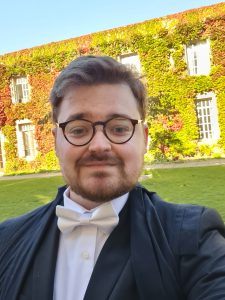
Luke Robert Horwitz is a PhD student at Durham University, working on a thesis entitled ‘Weep for those that wept by Babel’s Stream!’ Compassion and Contradiction: The Duality of Antisemitism and Philosemitism in the Poetical Thought of Lord Byron. His doctoral research intersects the scholarly fields of Byron and Judaic studies, with a focus on Byron’s complex and often contradictory views on the contemporary European Jewish diaspora and the contemporaneously contentious debate known as the Jewish question. Horwitz completed a masters degree at Regent’s Park College, Oxford, and undergraduate studies at the University of York.
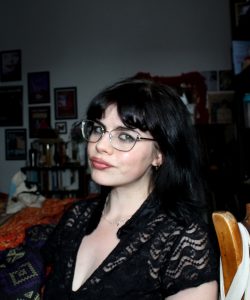
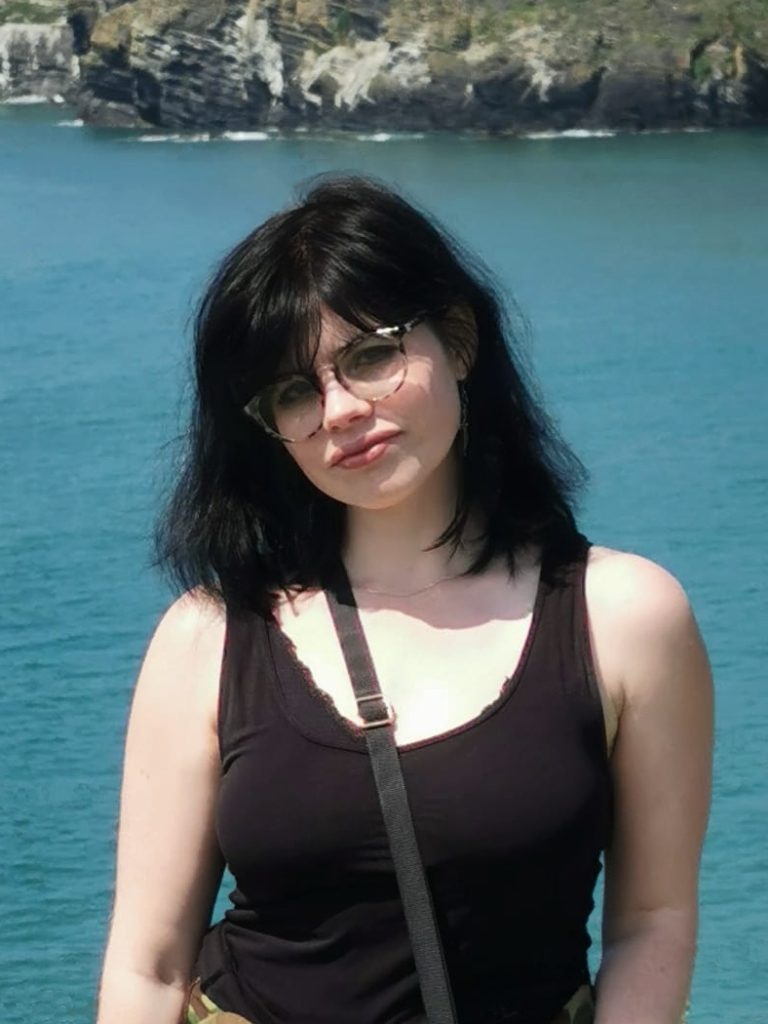
Lucy Davies is a PhD student at Lancaster University. Her thesis is entitled ‘’Who is Nervous, if I am not?’: The Nervous Disorder and the Works of Byron.’ The period in which Byron was writing was a time of huge developments in science and medicine, which were of interest to Byron. The thesis explores Byron’s work and its relationship with the eighteenth and nineteenth century medical concept of the nervous disorder. Looking at a mixture of nineteenth century medical writing and close readings of works such as Don Juan, Heaven and Earth, and Cain, it will argue that the popular medical conception of the nervous disorder influenced not solely Byron’s writing, but his identity and his politics.
Lucy is in the second year of her PhD and completed her MA and undergraduate studies at Lancaster University. She has previously written on Byron and melancholia, and the science of diet in Romanticism. Lucy is the postgraduate representative of the British Society of Literature and Science executive council and is interested in Romanticism and medicine.
2025/2026 PhD Bursary Award Recipient:
Lucy Davies
Lucy Davies is a PhD student at Lancaster University. Her thesis is entitled ‘The Nervous Disorder and the Works of Byron.’ The period in which Byron was writing was a time of huge developments in science and medicine. The thesis explores Byron’s work and its relationship with the eighteenth and nineteenth century medical concept of the nervous disorder, looking at a mixture of nineteenth century medical writing and close readings of works such as Don Juan and Cain.
Lucy completed her MA and undergraduate studies at Lancaster University. She has previously written on Byron and melancholia and the science of diet in Romanticism. She is interested in Romanticism and medicine.